


Hey, friends! Below are four recipes inspired by Chef’s travels to Japan. Some of these dishes have been featured on Mabel Gray menus, some are more mainstays of Chef’s pantry arsenal. As someone who cooks at home a lot, and has recreated Chef’s written recipes in the past: he is like the prototypical Italian ‘nonna’ who does everything by feel and memory, never writing anything down. These recipes are meant to be adjusted based on your personal preferences. Use your gut and your senses, taste as you go, and most importantly - read the recipe all the way through before you grocery shop. We believe in you! ~ Paulina
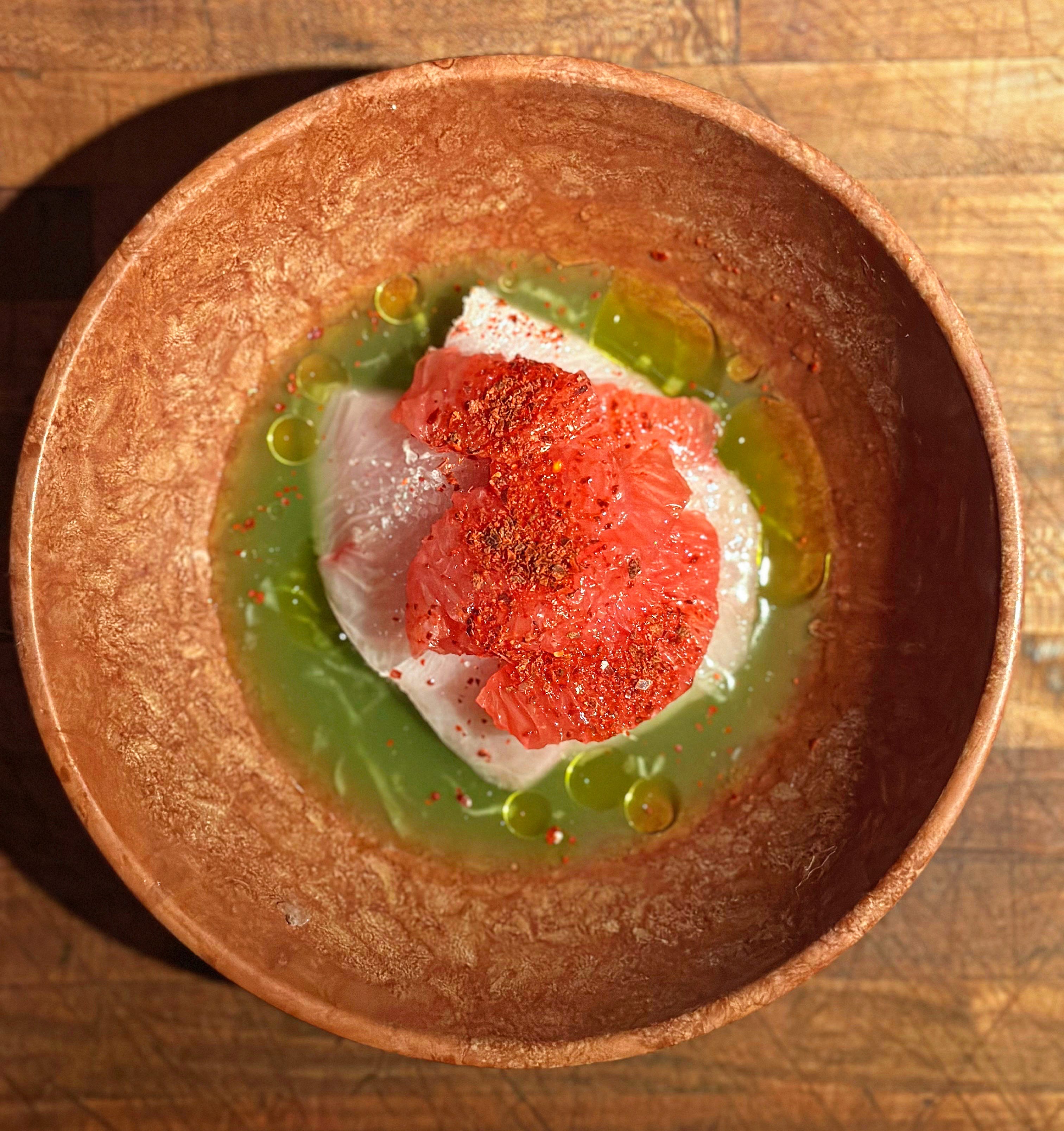
Raw Fish & Broth
I don’t suspect many Americans, whether in the Midwest or not, are making much raw fish at home. But if you find yourself with access to high quality sashimi grade seafood, there’s no reason not to. Locally, we have a few places you can procure sashimi grade fish: One World Market & Noble Fish. This time of year, I like to serve sashimi in a very bright and clean preparation of cucumber & yuzu kosho broth, with beautiful Texas red grapefruit segments, grated daikon, a sprinkle of gochugaru (Korean chile powder), sea salt, and a drizzle of verdant green olive oil. I recommend hamachi, Hokkaido scallops, ahi, snapper, or fluke.
Ingredients:
Maldon Sea Salt Flakes
High quality olive oil (we use this)
High quality gochugaru
1-2 large (heavy for their size) juicy Texas red grapefruits, segmented.
Sashimi grade fish, sliced a quarter inch thick (plan on 2-4 ounces per serving)
1 fresh daikon root, peeled and grated on a small-holed grater. A wasabi grater will work too.
2-3 English cucumbers
1 small jalapeño
2 limes, juiced
1-2 tablespoons yuzu kosho paste (I like Yakami Orchards)
1/4 cup fish sauce (I like Three Crabs)
Sugar to taste
For the broth:
Juice the English cucumbers and jalapeño (we use a centrifuge-style juicer like this one). Combine with the lime juice, yuzu kosho paste, and fish sauce. Strain mixture through a chinois or fine mesh sieve. Season to taste with salt and sugar. The broth should be bright and acidic, balanced with sweetness.
Assemble the dish in a small bowl. First, a few tablespoons of grated daikon in the center of the bowl. Then, fish on top. Broth gently ladled in, being careful to not disrupt the fish. Sprinkle a little sea salt over the fish. Top with grapefruit segments, gochugaru, and a drizzle of olive oil. Voila! Errr actually, Kanpai!
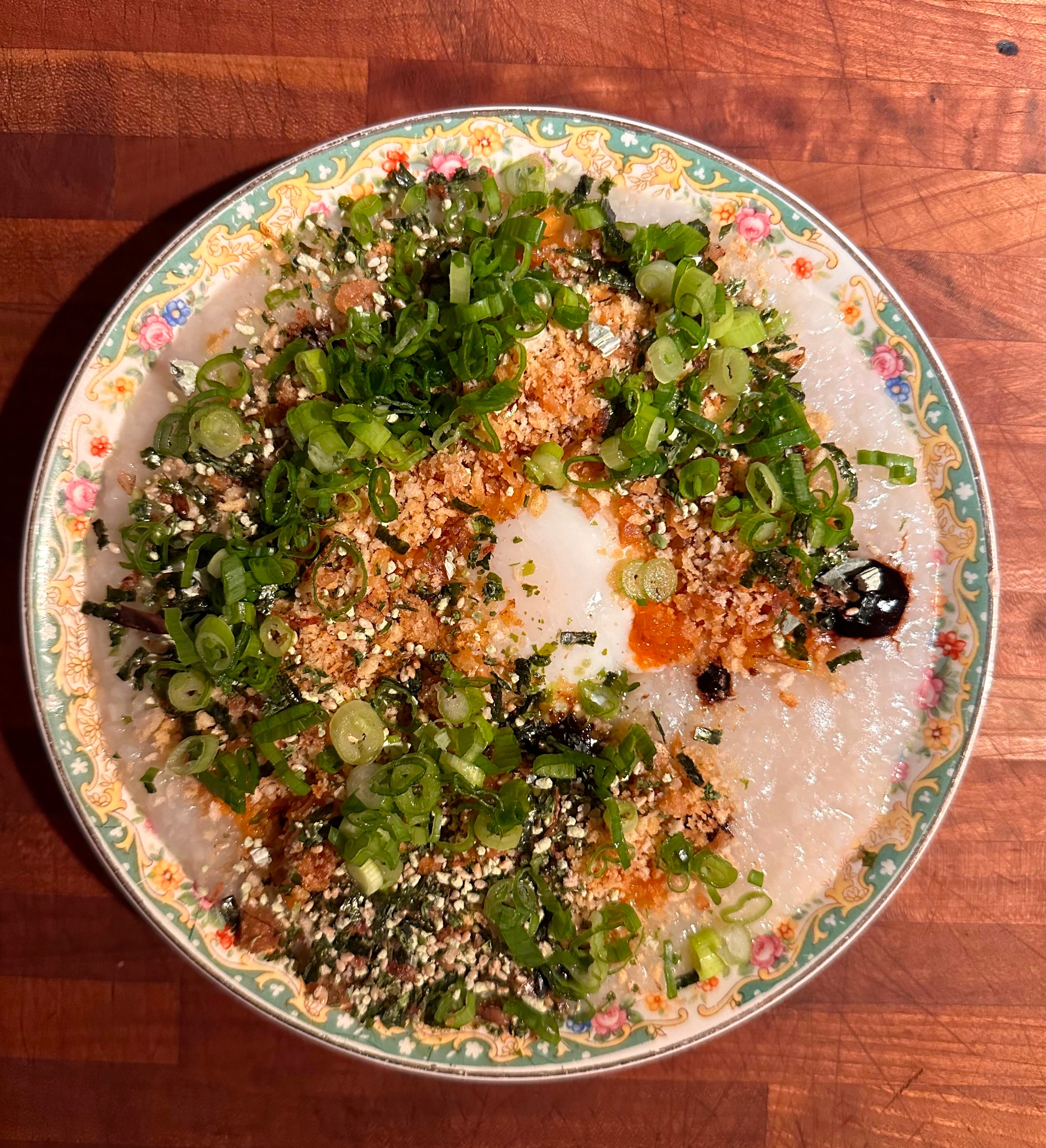
Rice Porridge: Congee, Okayu, Cháo, Khao Piak, Jok
Regardless of what country rice porridge is made in, it’s a well-understood and delicious comfort food that serves as an incredible base for everything from a little dash of furikake to a fully topped meal fit for royalty.
I like to use jasmine rice for most of my congee but a nice short grain Japanese rice, like koshihikari, works great as well! Start by sauteeing some aromatics (think ginger, garlic, lemongrass, shallot, galangal, chiles) in a little sesame oil until softened and pungent. Add 1 part rice to 8 parts water (or dashi or stock). Now, I often add water and get the ratio closer to 1:9. But adding water is easy, making it too thin is harder to fix. Simmer the rice until it breaks down into porridge consistency similar to grits. The rice will be completely absorbed by the liquid. If it’s too thick, add more of whatever liquid you cooked it in and adjust seasoning accordingly.
There’s a million garnishes you can use. I like spicy peanuts, scallions, chopped kimchi, ground beef/pork/chicken, steamed lap cheong sausage, onsen egg, furikake, garlic breadcrumbs, pickled chiles, bok choy, crispy shallots, chile crisp, ok ok you get the idea. Congee reheats phenomenally, is great for meal prep ahead of time, a great way to utilize leftover rice (just start with less water) and it’s very comforting on a cold day or when you’re sick.
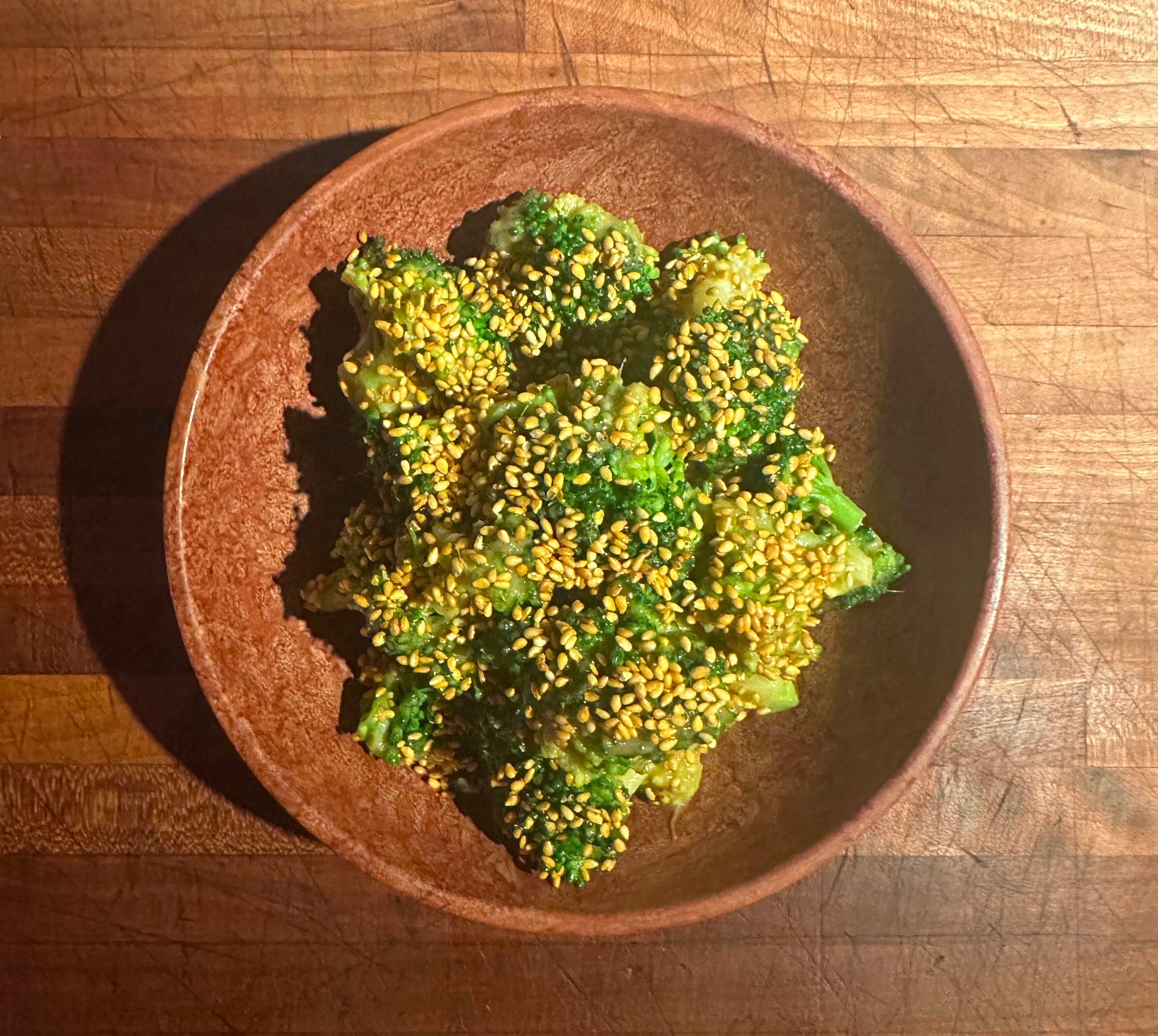
Japanese Style Broccoli “Gomaae”
This is a fairly common vegetable preparation in Japanese cuisine. Basically, steamed or blanched vegetables, tossed in sesame oil, sesame seed, soy sauce and sometimes miso/mirin/rice wine vinegar. I love using broccoli freshly blanched in salted water and then tossed in the dressing below, then topped with toasted sesame or furikake (my obsession, clearly). If not broccoli, try bok choy, asparagus, Brussels sprouts, Napa cabbage.
Japanese Broccoli Dressing:
1 cup white miso
1 cup mirin
1 1/2 cups peeled fresh ginger
1 1/2 cups sesame oil
1 lemon, juiced
Splash of rice wine vinegar
Combine everything in a blender. Puree until smooth. Toss blanched or steamed vegetables in the dressing. Sprinkle over toasted sesame seeds or Furikake to garnish.
Tare
Tare is a soy-based sauce made to brush skewers (kushiyaki, yakitori) or season ramen broths when built to order. Many different ingredients can go into a Tare. I typically use:
Soy sauce
Sake
Szechuan peppercorns
Ginger
Garlic
Mirin
Kombu
(And sometimes)
Chicken stock
There’s a bunch of recipes out there. I recommend you play around and make your own. Season accordingly to your preferences. But definitely stop buying premade teriyaki sauce. Make your own tare!
Here’s a fully flavored recipe. Plenty of others are even simpler.
Paulina’s Picks: Sake Pairing
We lean on sake a lot at Mabel Gray. Chef’s ever-evolving tasting menu features rich, funky, spicy, vibrant cuisine that begs for a robust chilled beverage with tropical aromatics. Sake is in a class of its own - it’s not a beer, a liquor, or a wine. It is brewed with painstaking attention to detail, tradition, and excellence. Sake is made from rice, water, koji, and yeast. The chosen rice strain dictates the fruit profile, while the water source affects the sake’s texture.
My favorite sakes are from the Niigata prefecture, one of the snowiest sake-producing regions renowned for pure mountain snowmelt water. My favorites are Shirataki Jozen ‘Aqua’ Junmai (dry, peachy, quenching) or Kikusui Funaguchi Nama Genshu Gold (unctuous and honeyed). Both are best served cold, poured for you by a loved one into an overflowing cup.